Why Reported Is Not Verified (Spanish)
A Spanish-language podcast on the difference between reported work and verified evidence.

META GLOBAL AI DEVELOPER HACKATHON · 2026
KRAKADYL is an active-investigation agent built on Meta's models. Muse Spark reasons and proposes the next investigative step; SAM 3.1 grounds regions in a capture. But a deterministic engine — not the model — seals every verdict before the model is ever asked to speak. Swap the model and the wording changes; the verdict, the seal, and the chain of custody do not.
Recorded in the running React app against the live deterministic backend, in Spanish because the investigator uses it herself. One real case, start to finish: the engine allows the export and seals the receipt, then the mandate is revoked and the same action is refused and sealed too. Nothing here is mocked.
Stills from the same run, in case the video does not autoplay — the English build of the workspace, against the live backend.
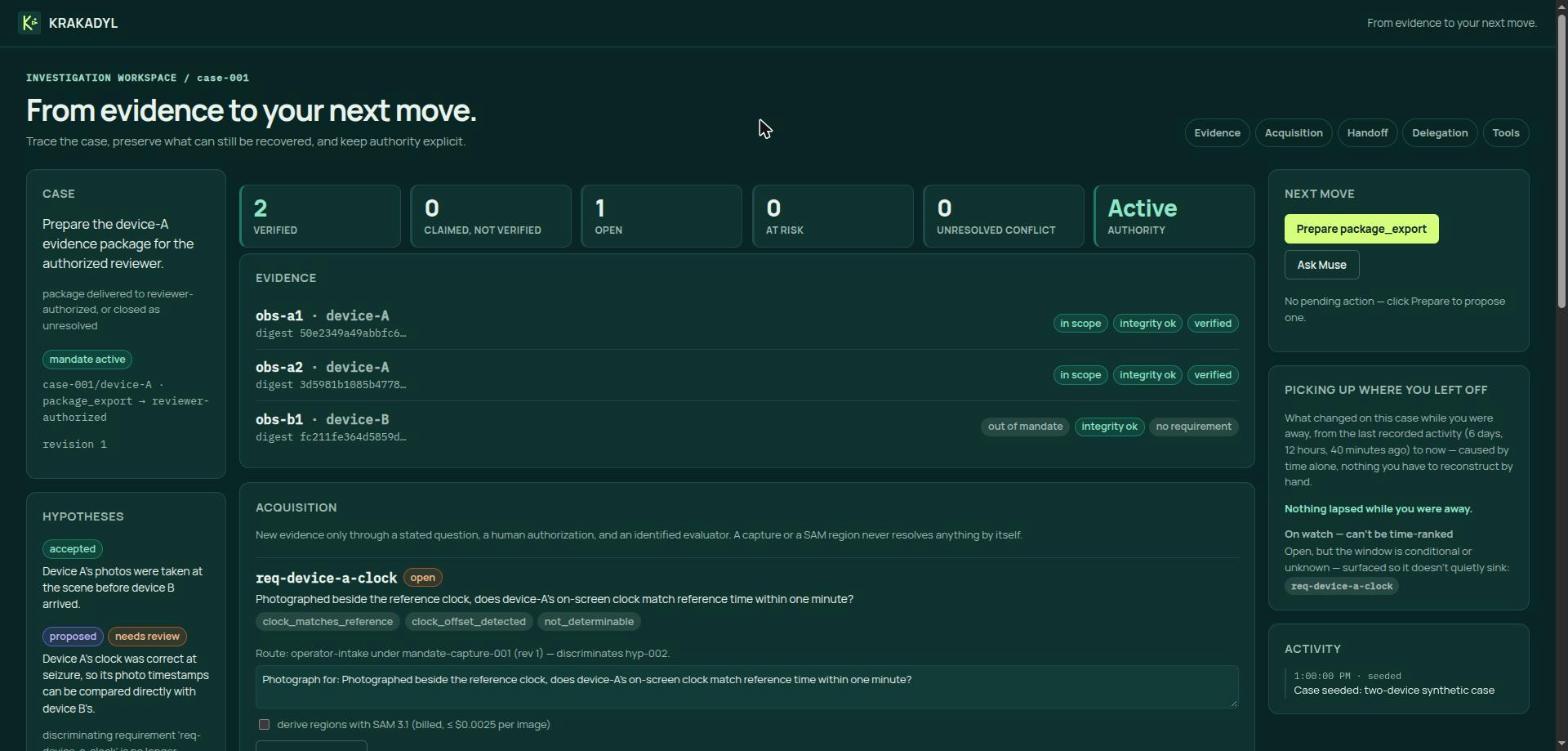
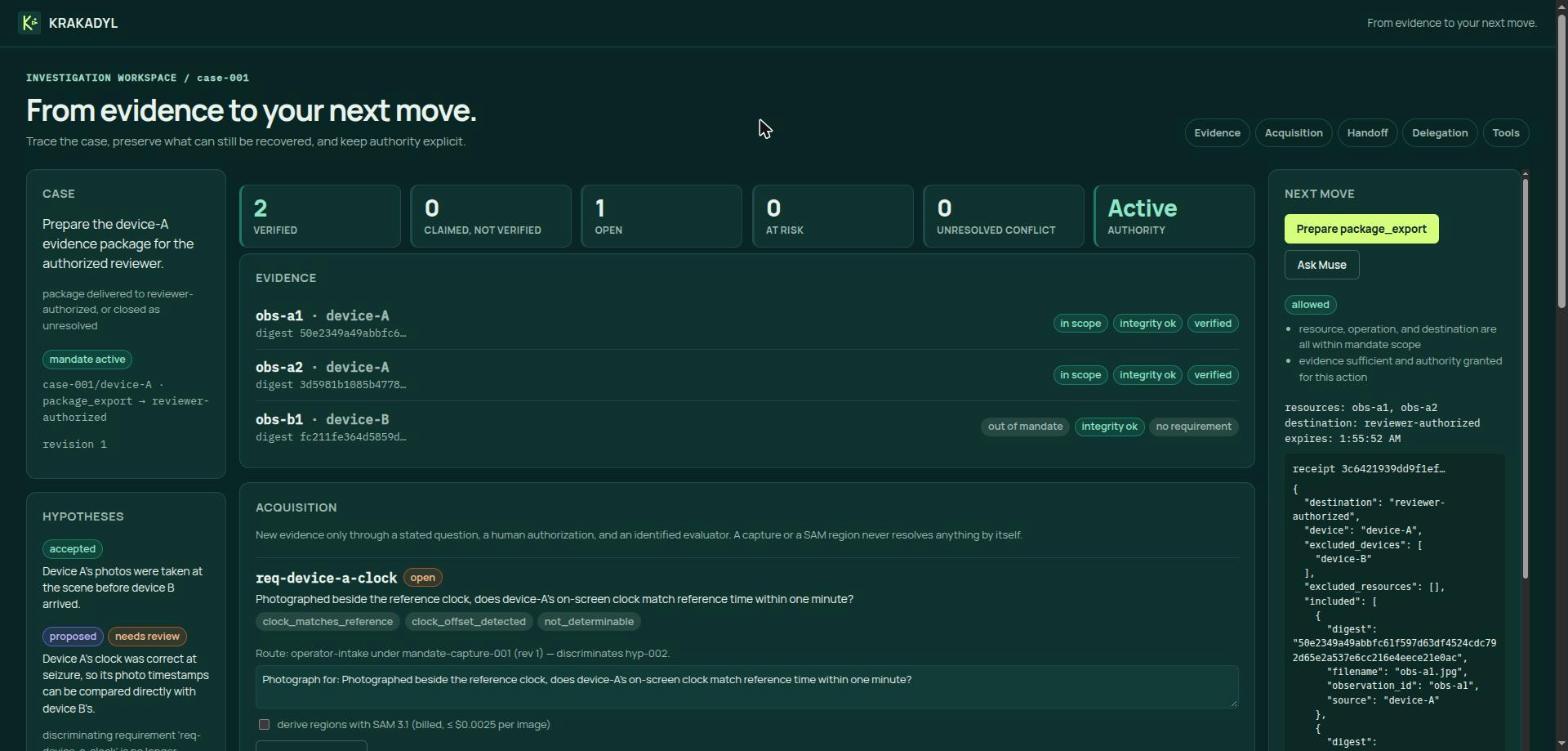
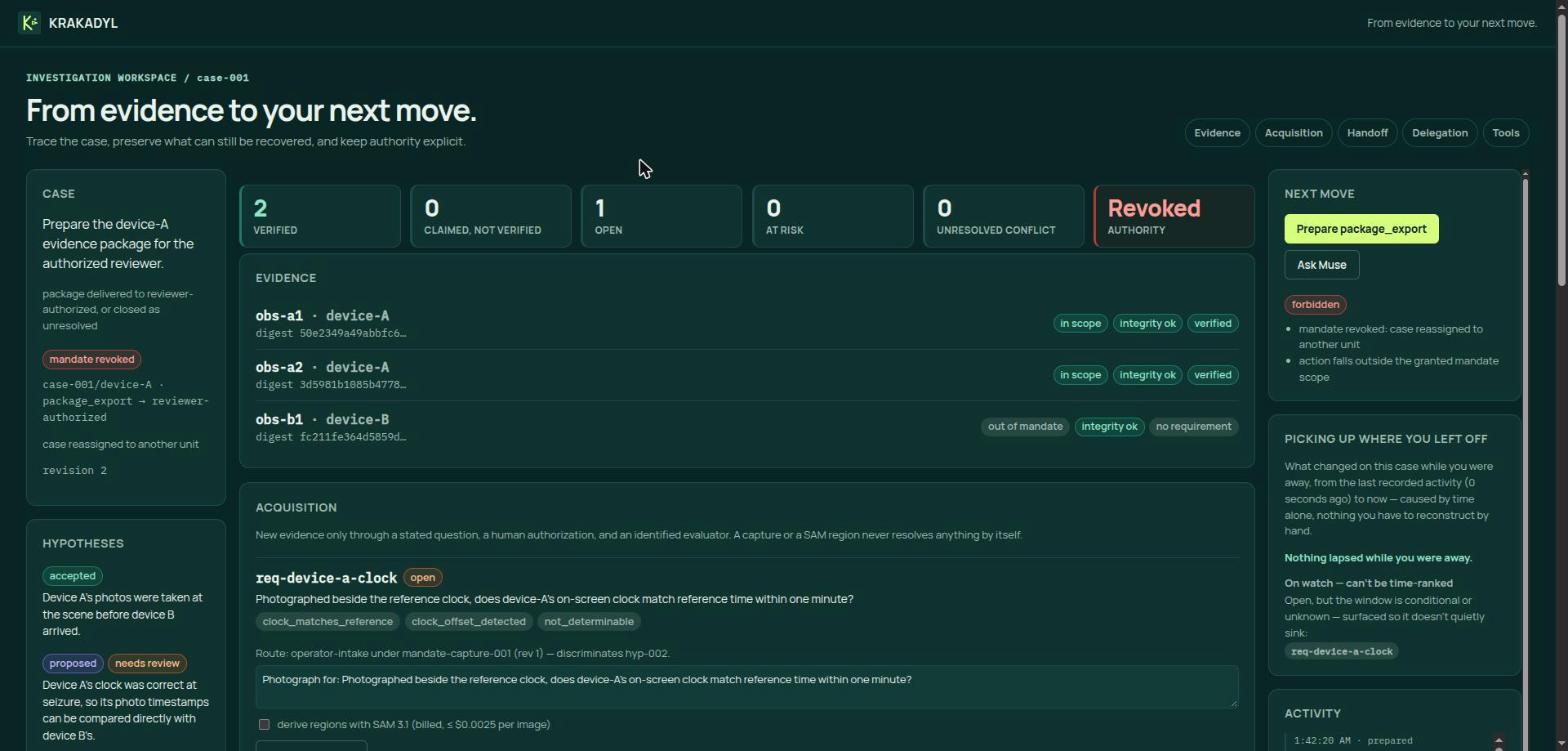
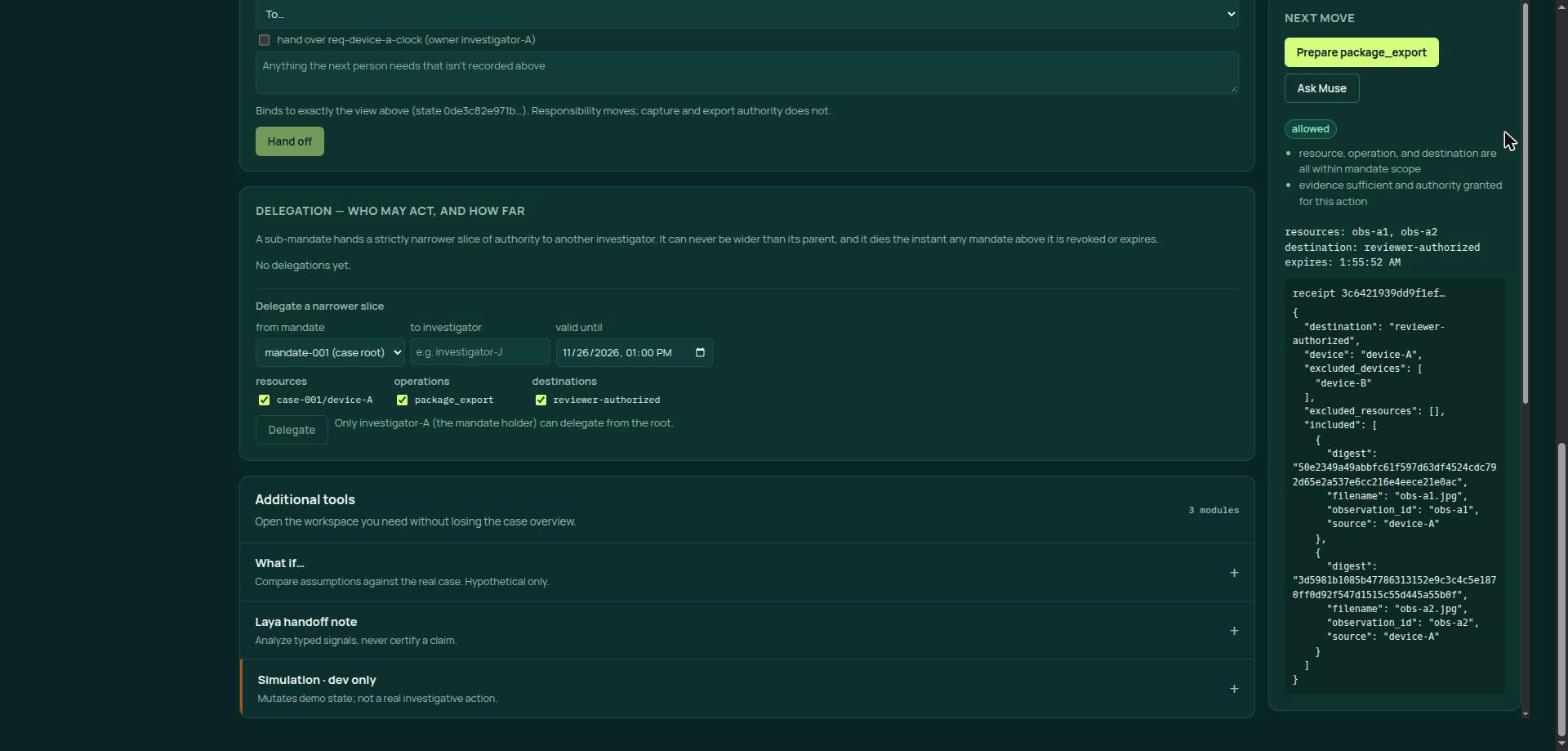
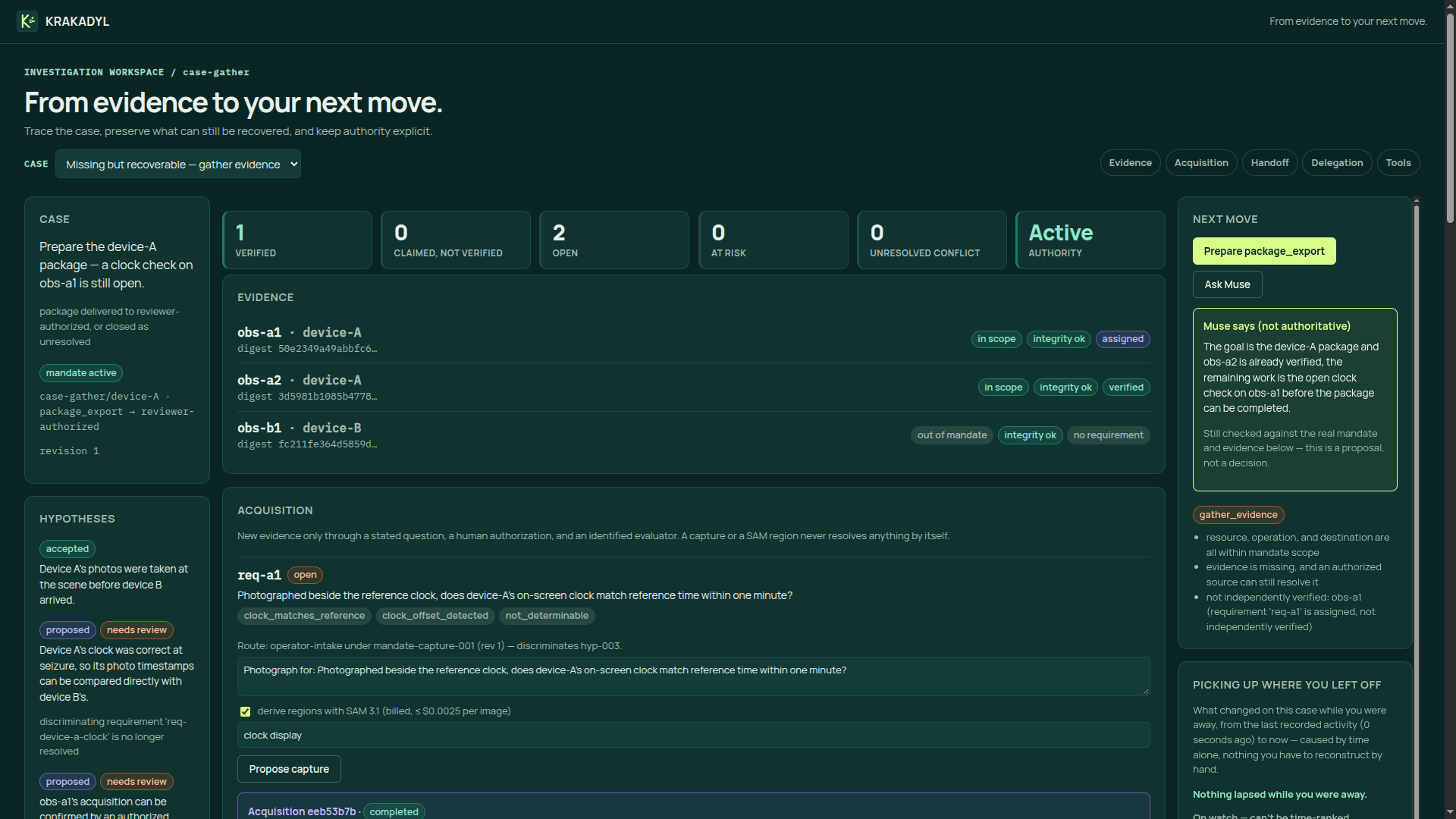
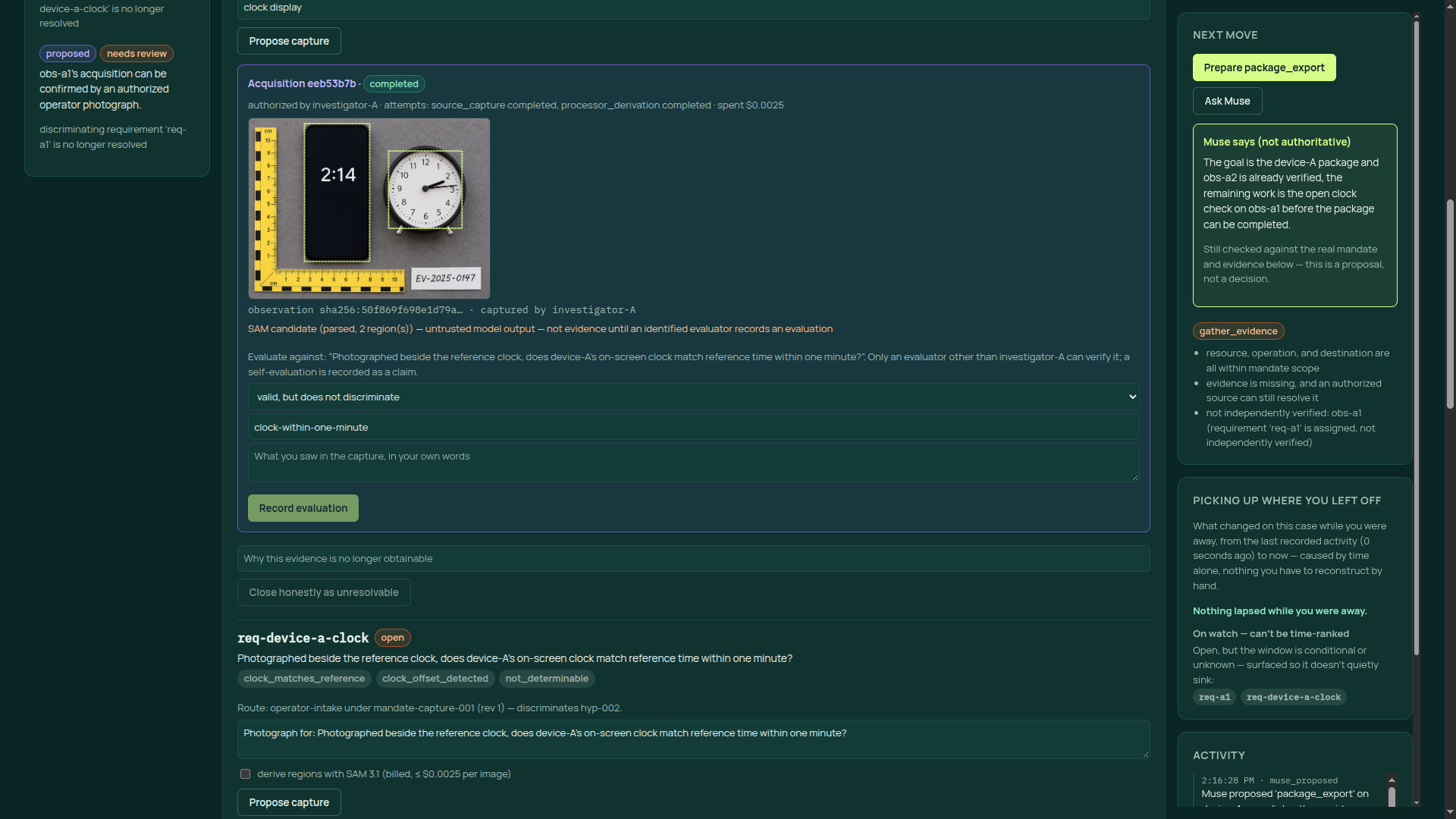
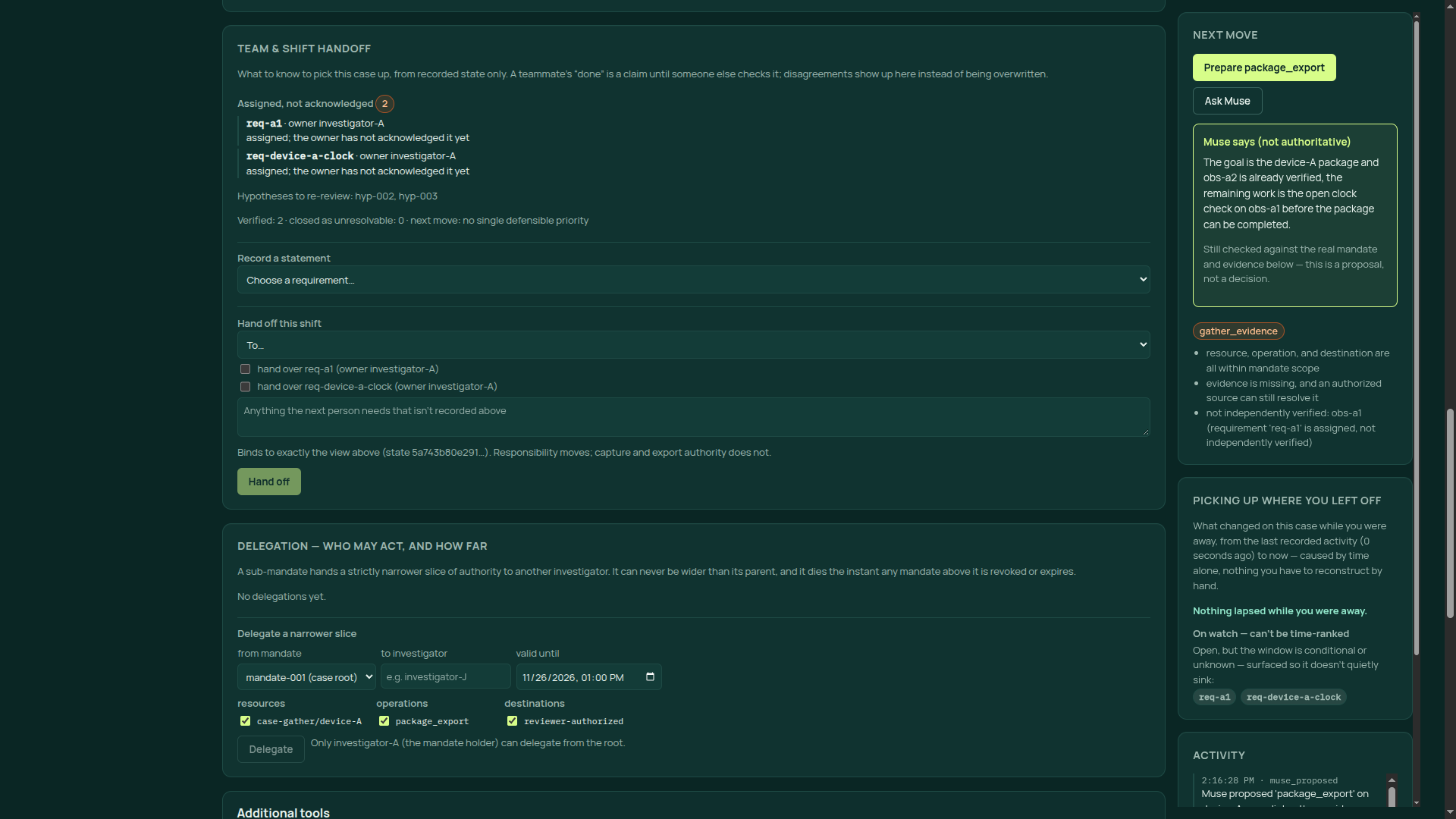
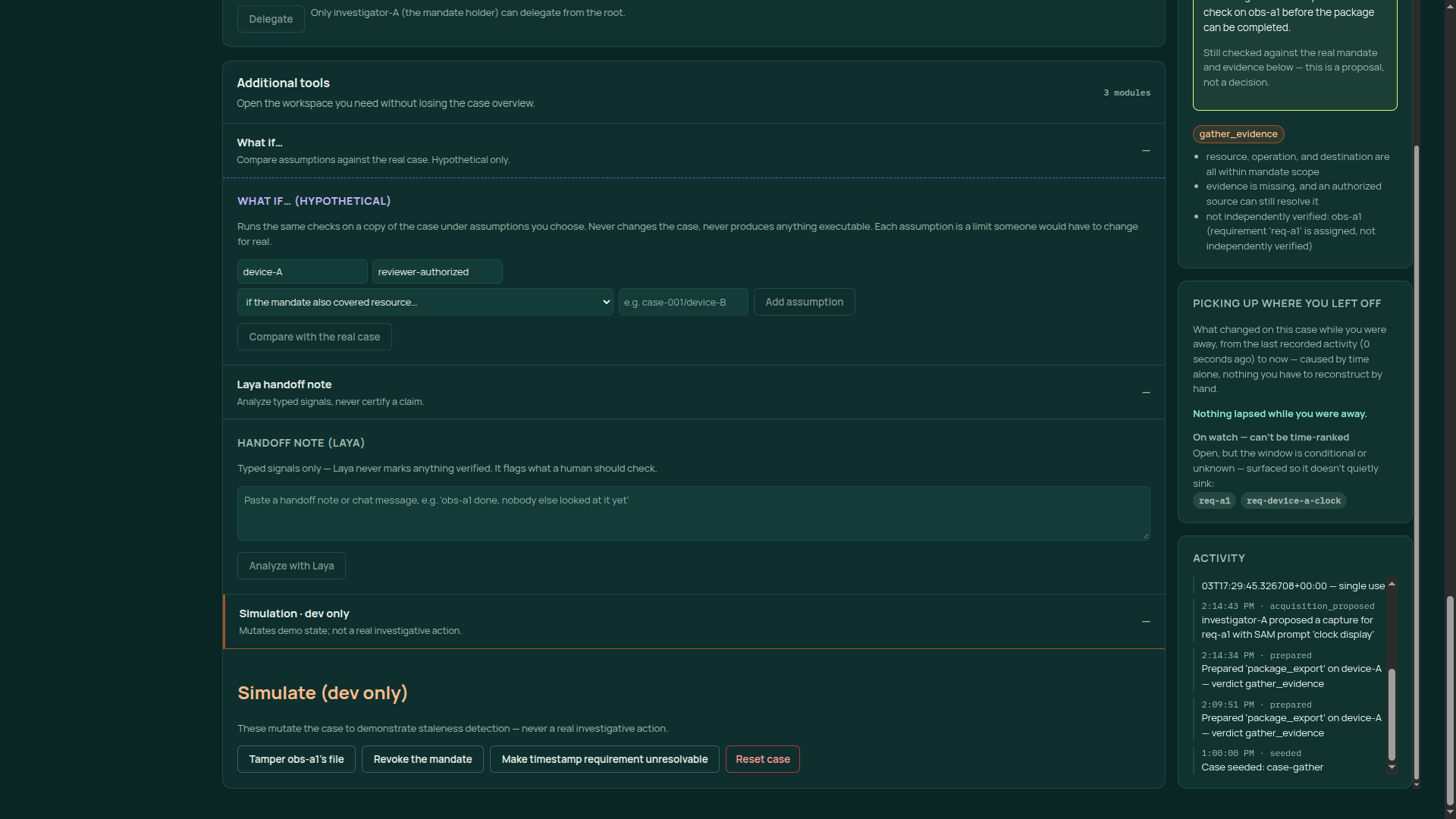
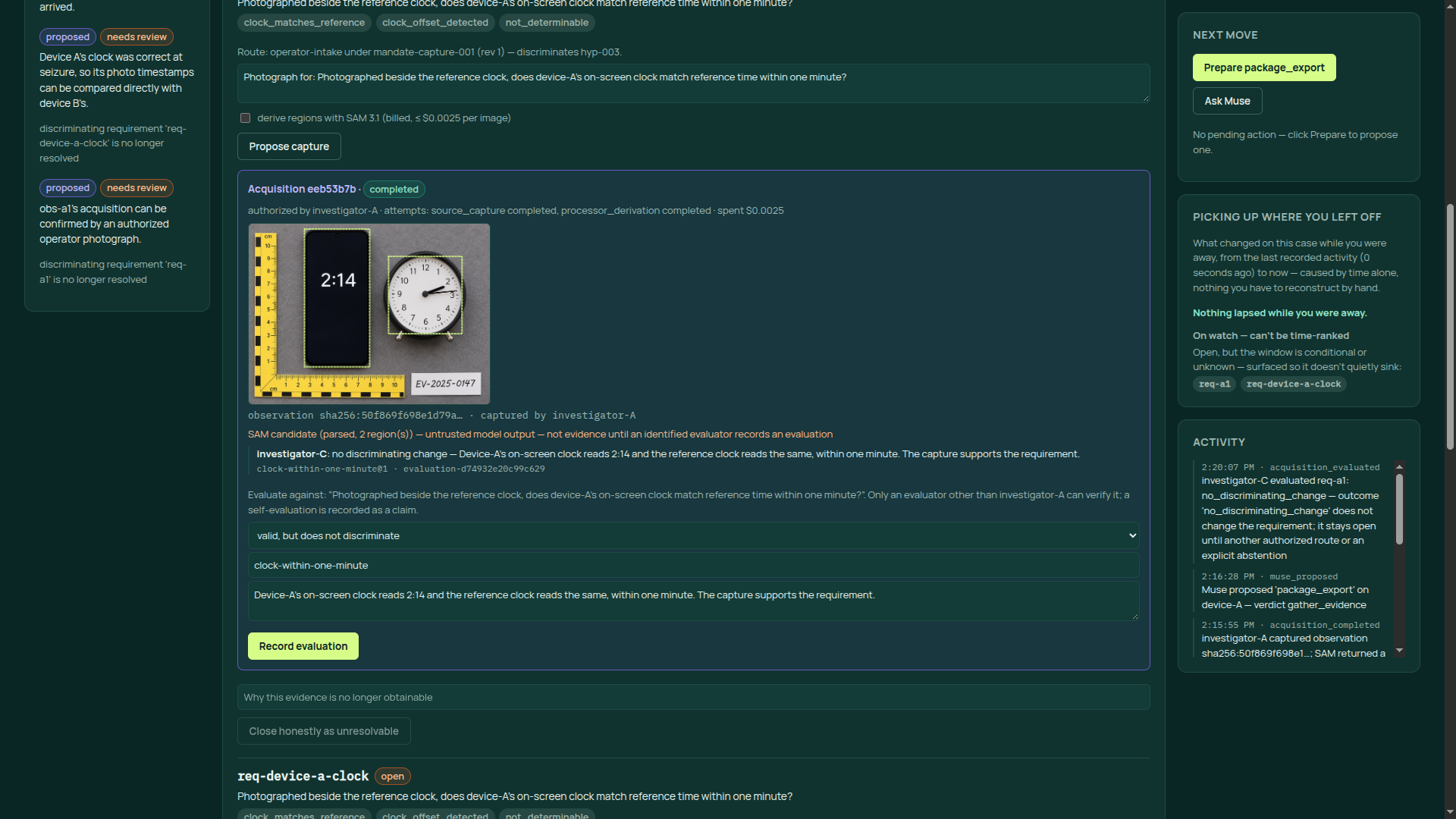
Screens from a real run of the case-gather workflow: the live case state, an authorized acquisition and its untrusted SAM candidate, the shift handoff, and supporting tools. They document what the workspace showed during the run; proposals and model output remain separate from verified evidence and authority.
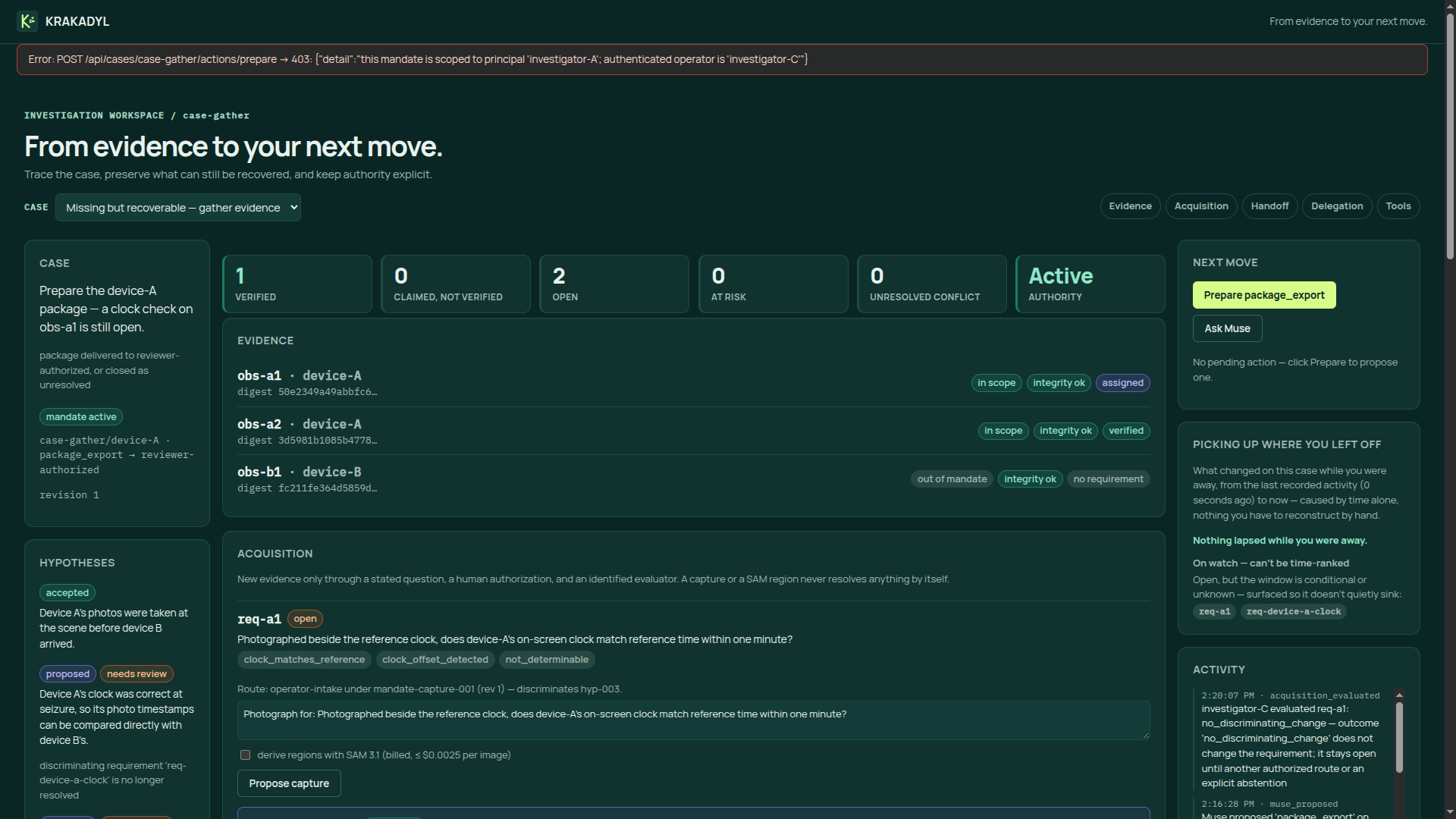
The requested package_export is in the case scope, but scope alone is not authority. This mandate is bound to investigator-A; the request was authenticated as investigator-C. The deterministic gate rejects it before the action is prepared, rather than letting an authenticated but unauthorized person act. The visible failure is therefore successful enforcement of the mandate boundary.
Every figure below is from an actual, billed call to the Meta Model API in this project — not a mock. Each goes through the same deterministic check_mandate · check_evidence · decide pipeline as a hand-built action, and seals a receipt either way. Reproduce them yourself at the bottom.
package_export on device-A → reviewer-authorizeddevice-B → partner-share) is run through the same engine.outside mandate scope: resource 'case-001/device-B', destination 'partner-share' not granted; not independently verified: obs-b1
64 real calls to the Meta sam-3.1 endpoint on synthetic images, all completed without an error or rate-limit response.
Stored strictly as an untrusted annotation candidate — a mask is never read as verified identity, custody, or causation, and resolves no requirement by itself. Honestly bounded: the run shows observed behavior for one image and two prompts, not model accuracy.
The deterministic core produces and seals the result before any model is called. The model receives a compressed, read-only summary and only puts fixed figures into words. Swap Muse for another backend and only the wording changes — never the verdict, seal, or chain of custody.
No float in the decision path; a canonical, versioned, type-tagged encoder; SHA-256 seals over the canonical bytes with an independent, stdlib-only verifier. A refused action is sealed as faithfully as an executed one.
The full 26-slide deck, in the same green-noir visual language — the architecture, the authority model, the levels, and the honest limitations. Opens as a PDF in the browser.
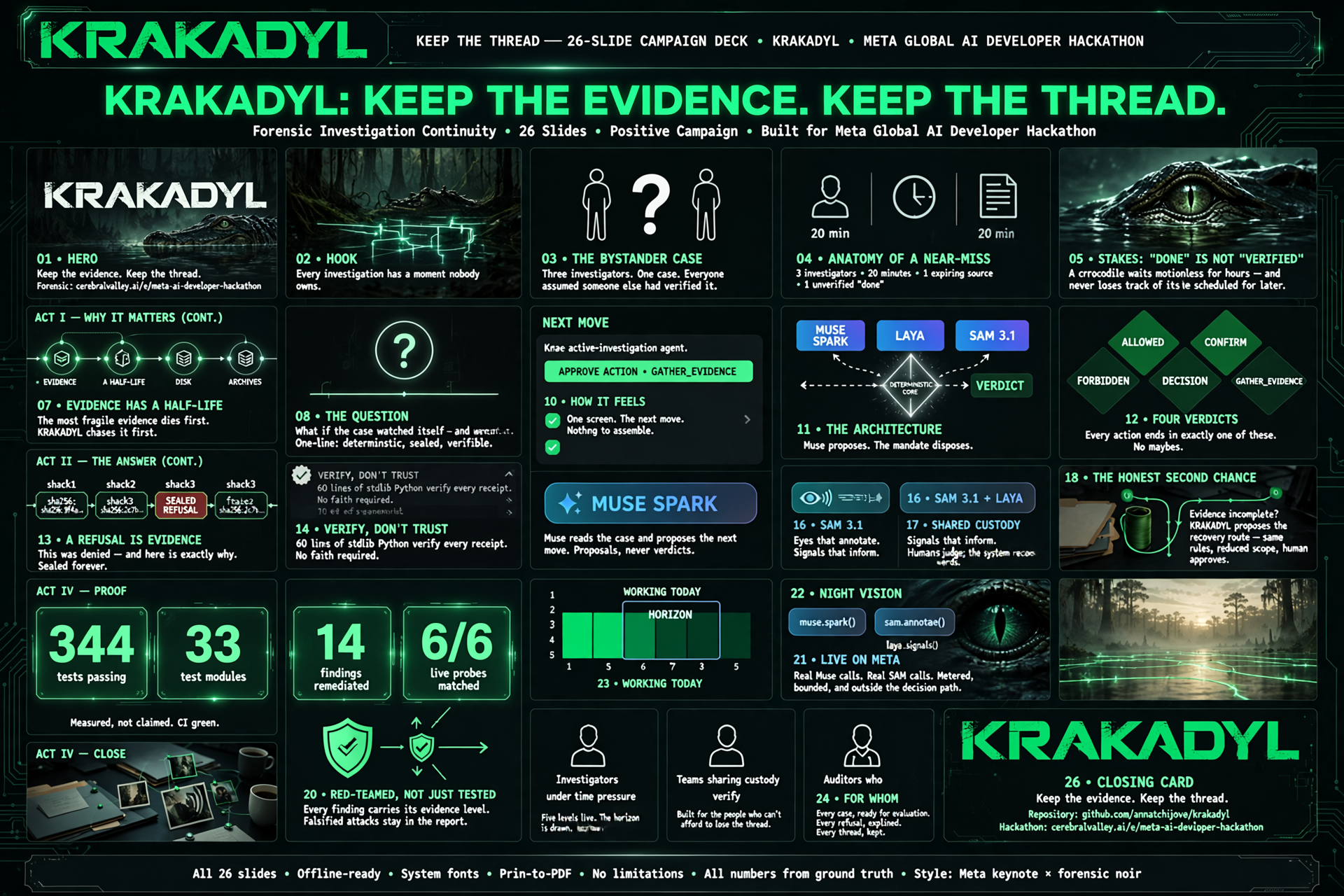 KRAKADYL — Jury Deck (Visual Edition)Open PDF ↗
The problem KRAKADYL is answering — bounded authority for personal AI agents, and why the model must stay out of the decision path — is written up in full, with the prior art acknowledged.
A six-panel visual map of the research — reported vs. verified, the investigative failure modes, the domain precedents, and where KRAKADYL fits. Click any panel to zoom in.
Start with the official three-minute hackathon presentation. The optional companion videos then offer longer explainers and context for anyone who wants to go deeper.
The official three-minute presentation: the problem, the solution, and a working KRAKADYL demonstration.
A short explainer of the core idea: the agent proposes, a deterministic engine decides, and every verdict is sealed — so an AI investigator gets as much autonomy as possible and exactly as much authority as necessary.
There is more to KRAKADYL than fits in three minutes. The official hackathon presentation focuses on the problem, the solution, and a working demonstration. This optional 6.5-minute companion explores the repository, international research, supporting visuals, and presentation slides at a slower pace.
You do not need this video to understand the official submission. It is here for anyone who wants to go deeper.
A longer video on preserving the thread of an investigation: the evidence, authority, and decision record remain explicit across interruptions and handoffs.
A Spanish-language podcast on the difference between reported work and verified evidence.

Why AI-generated suggestions must stay separate from independently verified evidence and authority.

A long-form English podcast on the investigation problems KRAKADYL is designed to contain.
Public and open from the first commit (Apache-2.0). With a Meta Model API key in the environment, the real calls above run end to end.
git clone https://github.com/annatchijova/krakadyl
cd krakadyl
uv sync --locked --extra dev --extra api

# the cooperative Muse call -> ALLOWED -> sealed receipt
META_API_KEY=... python demo/run_case_001_with_muse.py

# the adversarial Muse call -> injection resisted, engine still refuses
META_API_KEY=... python demo/run_case_001_muse_adversarial.py
The deterministic suite (no network) runs with uv run pytest -q; a live uvicorn server is checked in CI under the locked environment.
